Pages

Showing posts with label Computer. Show all posts

1 Mar 2015

640TBs Of Data In One Billionth Of A Second

Let me introduce The Machine- HP’s latest invention that could revolutionize the computing world. According to HP, The Machine is not a server, workstation, PC, device or phone but an amalgamation of all these things. It’s designed to be able to cope with the masses of data produced from the Internet of Things, which is the concept of a future network designed to connect a variety of objects and gadgets.

In order to handle this flurry of information it uses clusters of specialized cores as opposed to a small number of generalized cores. The whole thing is connected together using silicon photonics instead of traditional copper wires, boosting the speed of the system whilst reducing energy requirements. Furthermore, the technology features memristors which are resistors that are able to store information even after power loss.

The result is a system six times more powerful than existing servers that requires eighty times less energy. According to HP, The Machine can manage 160 petabytes of data in a mere 250 nanoseconds. And, what’s more, this isn’t just for huge supercomputers- it could be used in smaller devices such as smartphones and laptops. During a keynote speech given at Discover, chief technology officer Martin Fink explained that if the technology was scaled down, smartphones could be fabricated with 100 terabytes of memory.

HP envisages a variety of future applications for this technology in numerous different settings, from business to medicine. For example, it could be possible for doctors to compare your symptoms or DNA with patients across the globe in an instant and without breaching privacy, improving health outcomes.

While this is an exciting development, unfortunately for us HP isn’t expecting to have samples until 2015 and the first devices equipped with The Machine won’t surface until 2018.

11 Jul 2014

US govt's world's biggest RAM disk

 The 2.5TB system is "the largest SSD installation in the world by far, without question", the executive VP for TMS, Woody Hutsell, told Techworld. The previous biggest one was under 500GB, he told us. At 2.5TB, it is roughly 10,000 times the size of the RAM in your PC. The list price of the system, which is made up from 40 RamSan 320 units, reviewed here, is $4.7million, although the US government received a discount. It was installed by TMS' OEM Dynamic Solutions International. So where is it and what's it to be used for? Well, the installation site is in Washington DC and the application involves hosting metadata for large file systems, several databases including Oracle and the acceleration of other storage-based applications by holding, for example, journal files in the SSD. What that means in simple English is that the US government has just bought the world's biggest RAM drive in order to speed up cross-checking across several vast databases. The way databases work, a query will tend to scan an entire table if it thinks that anything more than a small percentage of the table's contents are relevant. However, when you are talking about vast databases, that process requires a huge amount of memory to store all the details. Unless you can store all that information temporarily (say in RAM), the query has to read from disks and that is a far, far slower process. The problem is compounded hugely when you are running a query across multiple databases. So, if you want to get at the information as fast as possible you need a monster RAM memory to temporarily store the details while it is sifting through. We do know that several of the servers using the SSD storage are running Solaris and that altogether the site has about 100TB of storage, but the specific government department and applications involved have not been revealed. However, not that many departments could possibly want to run such vast queries regularly. It would also be extremely difficult to justify a $4.7 million investment unless that work was seen as vital and speed was a main consideration in that work. It is also peculiar that such a large purchase could be approved at a time of tightening belts. Now, we're not saying that the Department of Homeland Security is behind the purchase. Or that it is using the technology to search the various databases of people that it, the government, the NSA and the Pentagon possess. But all of them are based in Washington DC and there are of course some issues about Islamic terrorists already living in the States. A RamSan 320 unit holds up to 64GB of RAM in a 3U rack unit. The US government order is housed in three full height rack units. There are over 320 2Gbit/s Fibre Channel ports and the aggregate I/O rate is 36Gbit/s. That is some serious hardware.

20 Jun 2014

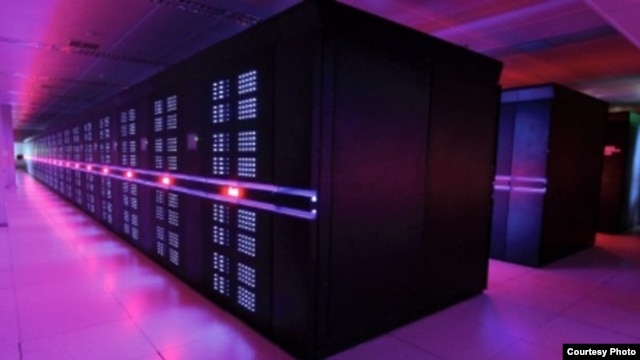
China Boasts World's Fastest Computer


World's Fastest Computer


China can now boast the world’s fastest supercomputer, according to the semiannual TOP500 official listing of the world's fastest supercomputers released Monday.


The Tianhe-2 was built by the National University of Defense Technology in China. It has a total of 3,120,000 Intel processing cores, but also features a number of Chinese built components and runs on a version of Linux called Kylin, which was natively developed by the NUDT.

Tianhe-2, or Milky Way-2, clocked in at number one with a performance of 33.86 petaflops per second, according to a press release issued byTOP500. The computer was developed by China’s National University of Defense Technology and will be deployed at the National Supercomputer Center in Guangzho, China, by the end of the year.

China last wore the crown of fastest supercomputer in November of 2010 with Tianhe-1.

The Chinese computer was a surprising winner, according to the release, because it was developed two years ahead of schedule.

China's Tianhe-2 is now the world's fastest supercomputer. Credit: TOP500.orgTianhe-2 has 16,000 nodes, each with two Intel Xeon IvyBridge processors and three Xeon Phi processors for a combined total of 3,120,000 computing cores.

"Most of the features of the system were developed in China, and they are only using Intel for the main compute part," said TOP500 editor Jack Dongarra in a news release accompanying the announcement. "That is, the interconnect, operating system, front-end processors and software are mainly Chinese," said Dongarra, who toured the Tianhe-2 development facility in May.U

The previous number one, the Cray-made Titan computer installed at the U.S. Department of Energy’s (DOE) Oak Ridge National Laboratory in Tennessee, is now ranked second. The third ranking computer, IBM’s Sequoia, installed at DOE’s Lawrence Livermore National Laboratory is also in the U.S.